Skip to contentSkip to main content
Modular

Build Faster
Backed By Industry Data

The EGX team carries more than 20 years of modular experience. EGX Modular works with preferred factory partners and runs disciplined feasibility on every project, residential and commercial. The structural advantage is speed. Lower cost and faster delivery follow from it.

Updated · Published
Modular Applications

What EGX Builds With Modular
Residential, ADU, Commercial

EGX deploys modular across three application classes. Preferred manufacturer relationships, vertically integrated fixtures and finishes, factory-grade tolerances, and predictable timelines apply to each.

01
Residential

California fire-rebuild homes in Altadena and Pacific Palisades. Modular speed keeps pace with insurance timelines and the urgency displaced families feel to get home.

02
Accessory Dwelling Units (ADU)

California's relaxed ADU rules make backyard density easy to add. Modular delivers a finished ADU in 8 to 12 weeks, for rental income or multi-generational living.

03
Commercial

More units means the factory cost spreads further. At scale, modular pays off faster and reaches stabilization sooner.

MultifamilyHospitalityWorkforceSenior Care
Systems

Two Ways To Build Off Site
And What Separates Them

Two methods, differing in one respect: how much of the building is finished before it reaches your lot. More completion in the factory means more schedule saved and more constraint on access. EGX selects between them at feasibility rather than defaulting to one, because the right answer changes with the site.

01Most complete off site
Volumetric Modular
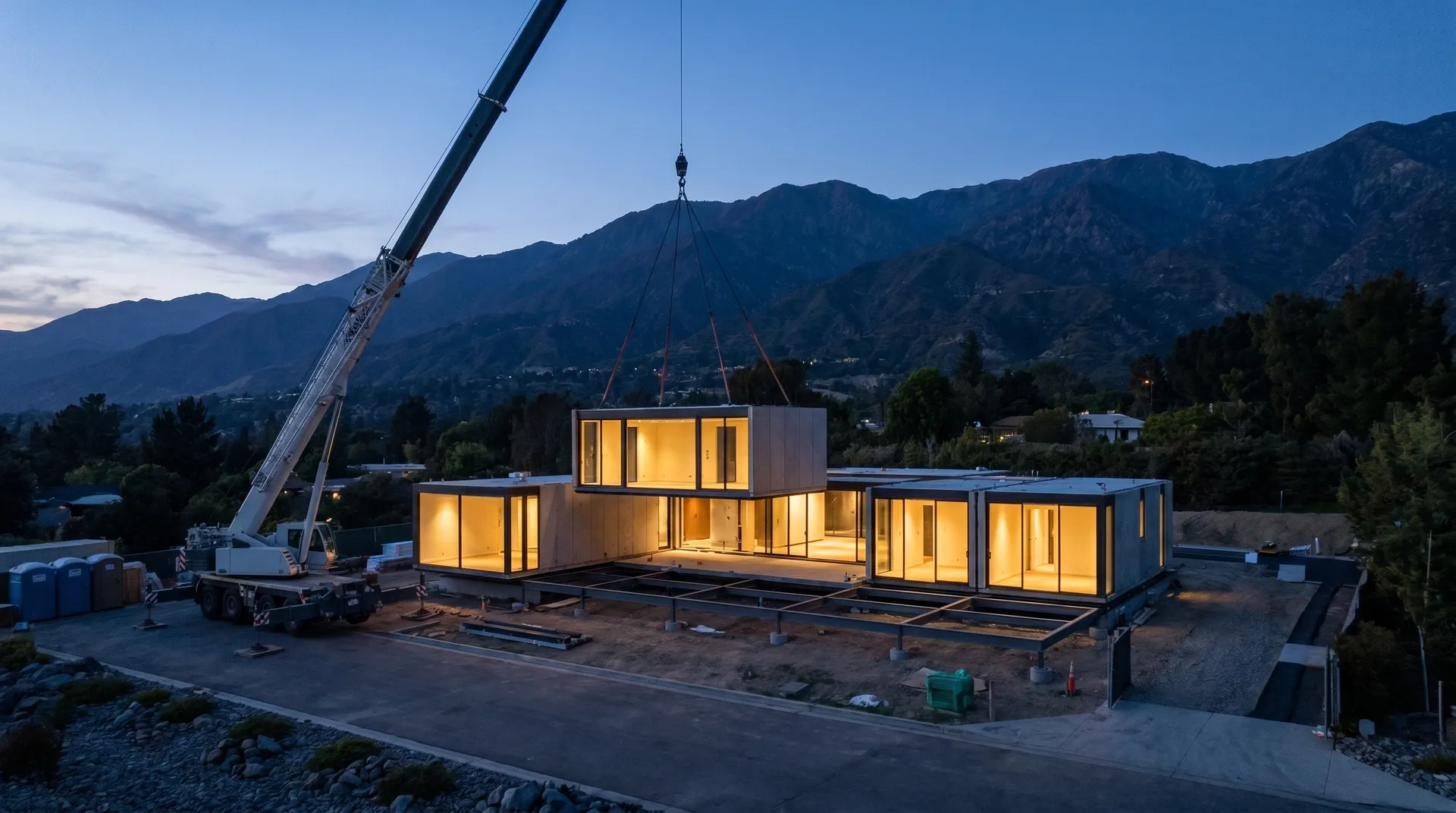
Room-sized three-dimensional boxes built and largely finished indoors, then set by crane and joined on site. Plumbing, electrical, insulation, drywall and often cabinetry are done before the module leaves the factory. Captures the most schedule benefit and the most factory quality control, because the most work happens where the weather and the trade schedule cannot reach it.
The Constraint
Requires crane access to the set location and a design that tolerates transport width. Steep, narrow or obstructed sites rule it out regardless of everything else.
02Flat-packed
Panelized
Wall, floor and roof panels built flat in the factory and assembled on site. Framing, sheathing and often windows and insulation are complete on arrival; the building is closed in far faster than stick-built, and finishing happens on site. Ships more cheaply than volumetric because a truck carries panels rather than air.
The Constraint
More site labour and less of the schedule advantage than volumetric, since interior work still happens in the field. In exchange it reaches lots a crane cannot serve, which is why it is often the answer on a hillside.
Which One, And When
Volumetric Wins When
  • A crane can reach the set location and the street carries a wide load.
  • The lot is level or close to it, with clear overhead and no power lines across the approach.
  • Several similar units are being built, so the factory setup spreads across more than one home.
  • Schedule is the binding constraint: a rebuild with a family in a rental, or a site carrying debt.
  • The plan is repeatable, with standard ceiling heights and no geometry that resists a box.
Panelized Wins When
  • The site is a hillside, a narrow canyon street, or anywhere a crane and a wide load cannot get to.
  • The design is architecturally specific, with angles, spans or ceiling heights a module cannot hold.
  • Transport distance to a volumetric factory is long enough to erase the savings, since a truck of panels carries far more building than a truck of air.
  • It is a single home rather than several, where there is little repetition to amortize a factory setup against.
  • Local trades are available and the schedule can absorb site finishing work.

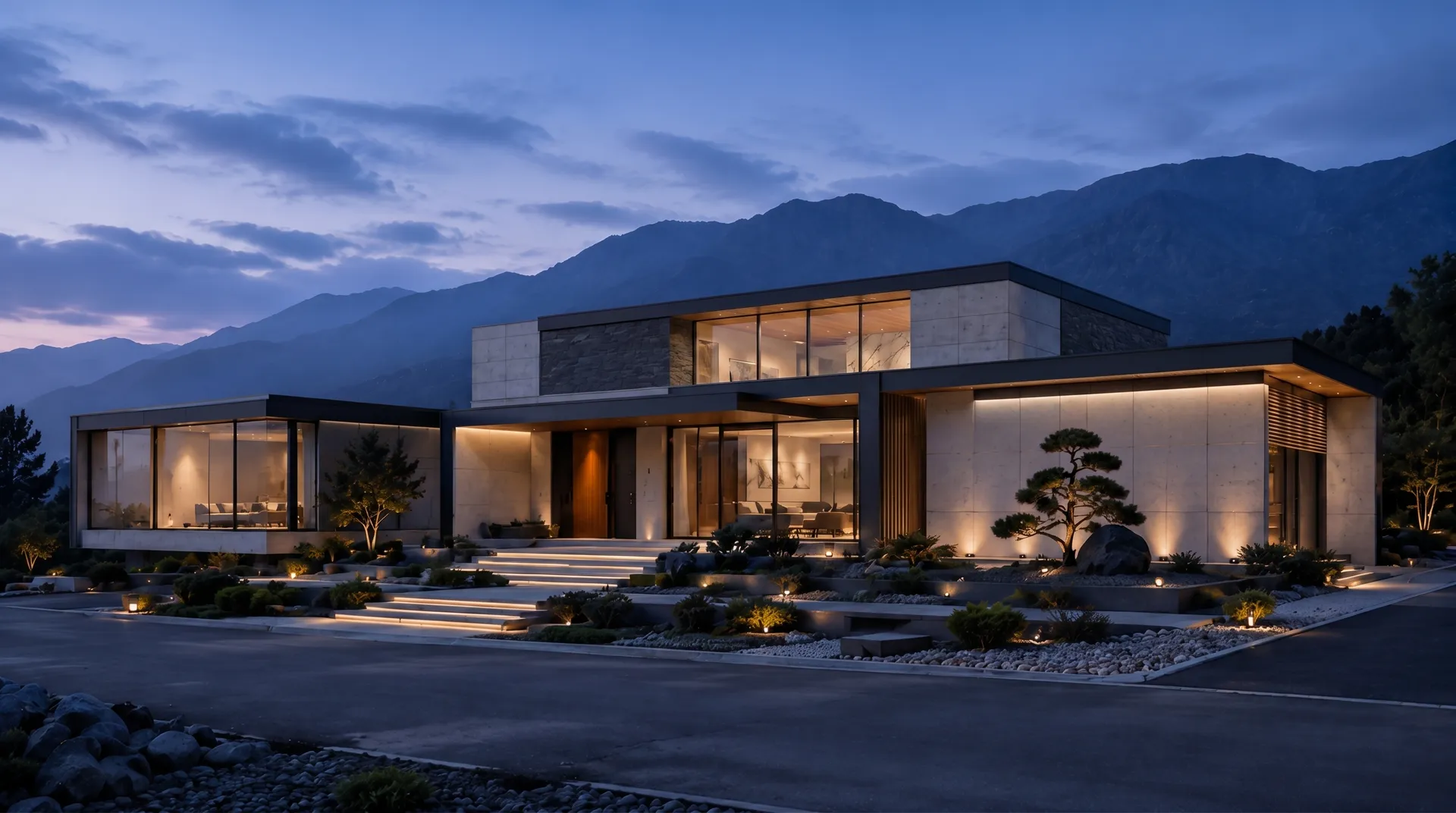
In practice the two combine more often than either is used alone: volumetric for the repeatable core of a building, panelized for the parts that resist it. The fit check below runs the same questions this table turns on.
Why Modular Is Inevitable

The Last Major Industry
To Industrialize

U.S. construction is a trillion-dollar-plus annual market, yet permanent modular construction still accounts for a small share of new starts. That gap is the opportunity. Modular delivers precision factory tolerances at compressed timelines, the same advantages that industrialized every other production economy decades ago.

EGX Modular is built to lead this shift, with active projects already executing against it.

$1T+
U.S. Construction Output
<5%
Modular Share Today
Precision
Factory-Built To Tolerance
EGX Investments
Active Pipeline

Conventional construction is squeezed on three fronts: project overruns, skilled-labor shortage, and persistent cost escalation. Modular addresses all three through factory-controlled production, off-site parallelization, and standardized supply chains. Per the Modular Building Institute (MBI), permanent modular construction continues to gain market share each year as developers reprice the conventional risk premium.

Project Overruns
A majority of large conventional projects deliver late and over budget. Field weather, trade sequencing, and material delivery cascade into months of slippage.
70%+Of large projects run over budget
Source: McKinsey, Reinventing Construction
Labor Shortage
The skilled-trade labor gap continues to widen across U.S. construction. Factory production substitutes a single-location specialized workforce for fragmented field crews.
439K+Additional workers needed in 2025
Source: Associated Builders & Contractors (ABC), 2025 Workforce Outlook
Cost Escalation
Hard costs have outpaced rents and asset values across most U.S. metros since 2020. Pro forma viability has narrowed across the conventional model.
+35%Construction materials since 2020
Source: U.S. Bureau of Labor Statistics PPI
The EGX Solution
Precision Factory Build
Solves All Three.
Factory-controlled production eliminates weather, sequences trades indoors, substitutes a specialized workforce for fragmented crews, and locks supply chain pricing. Tighter tolerances, predictable schedule, compressed cost. Quality control runs on a production line.

Industry context referenced from the Modular Building Institute (MBI) Permanent Modular Construction Annual Report and adjacent industry research (McKinsey, KPMG, Associated Builders and Contractors). Specific figures vary by year and source - refer to MBI publications for current data.

Residential ROM Comparison

Single Home To Subdivision
Speed Compounds With Unit Count
EGX Investments
Modular
Single-Family Rebuild (3,000 sf)
Speed Delta
Plans, permits, and construction through delivered units
Traditional
16-25 months
Modular
11-18 months
30-35% faster delivery
Cost Delta
Bonus
Hard-cost ROM versus conventional baseline
Traditional
100% (baseline)
Modular
90-95%
5-10%+ savings on hard cost. Soft costs and carry compress further from shorter timeline. All projections. Actual deltas often run higher.
EGX Investments
Modular
Subdivision (10-30 units)
Benefits Amplified
Speed Delta
Plans, permits, and construction through delivered units
Traditional
22-32 months
Modular
14-21 months
30-35% faster delivery
Cost Delta
Bonus
Hard-cost ROM versus conventional baseline
Traditional
100% (baseline)
Modular
90-95%
5-10%+ savings on hard cost. Soft costs and carry compress further from shorter timeline. All projections. Actual deltas often run higher.
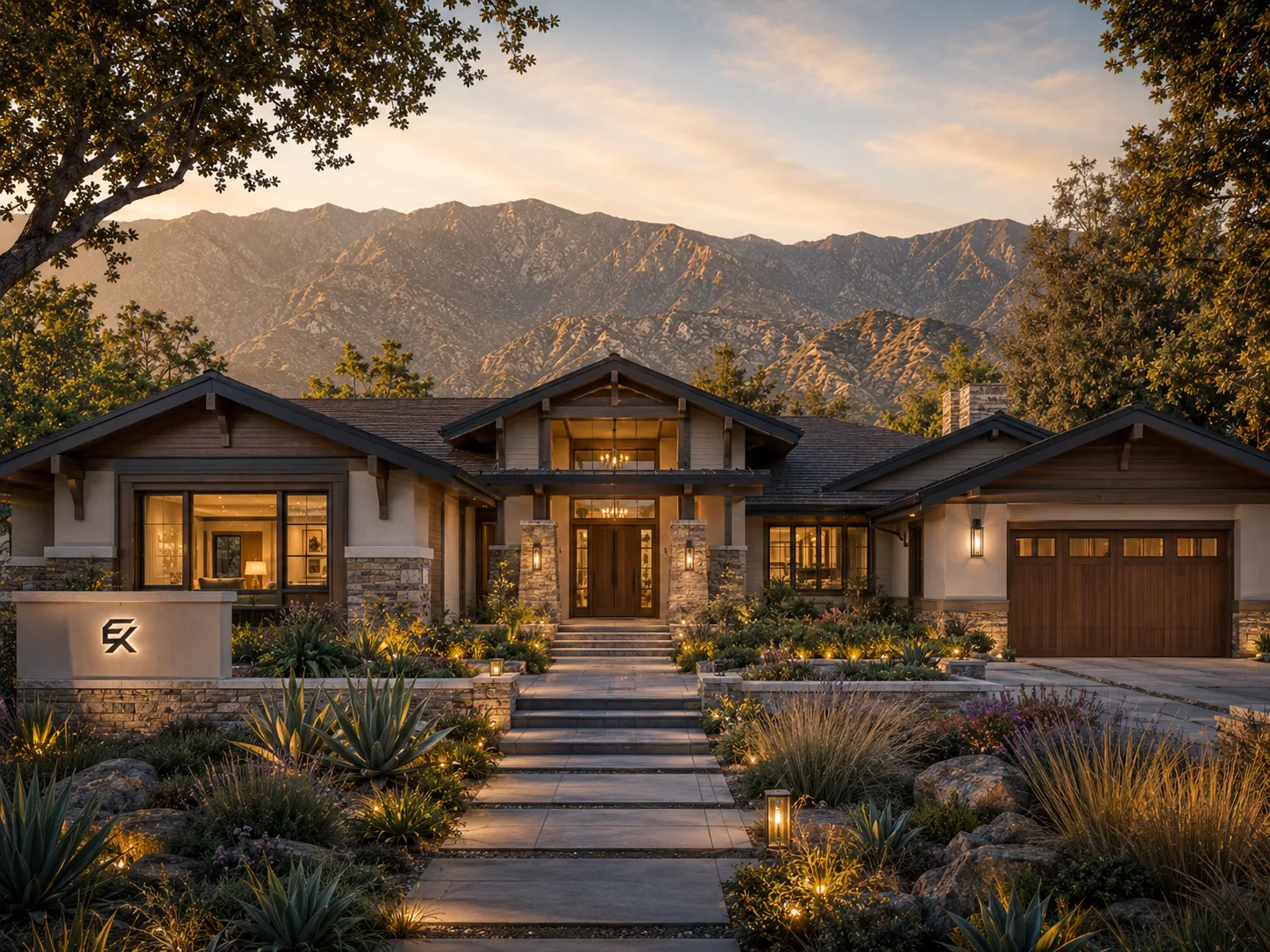
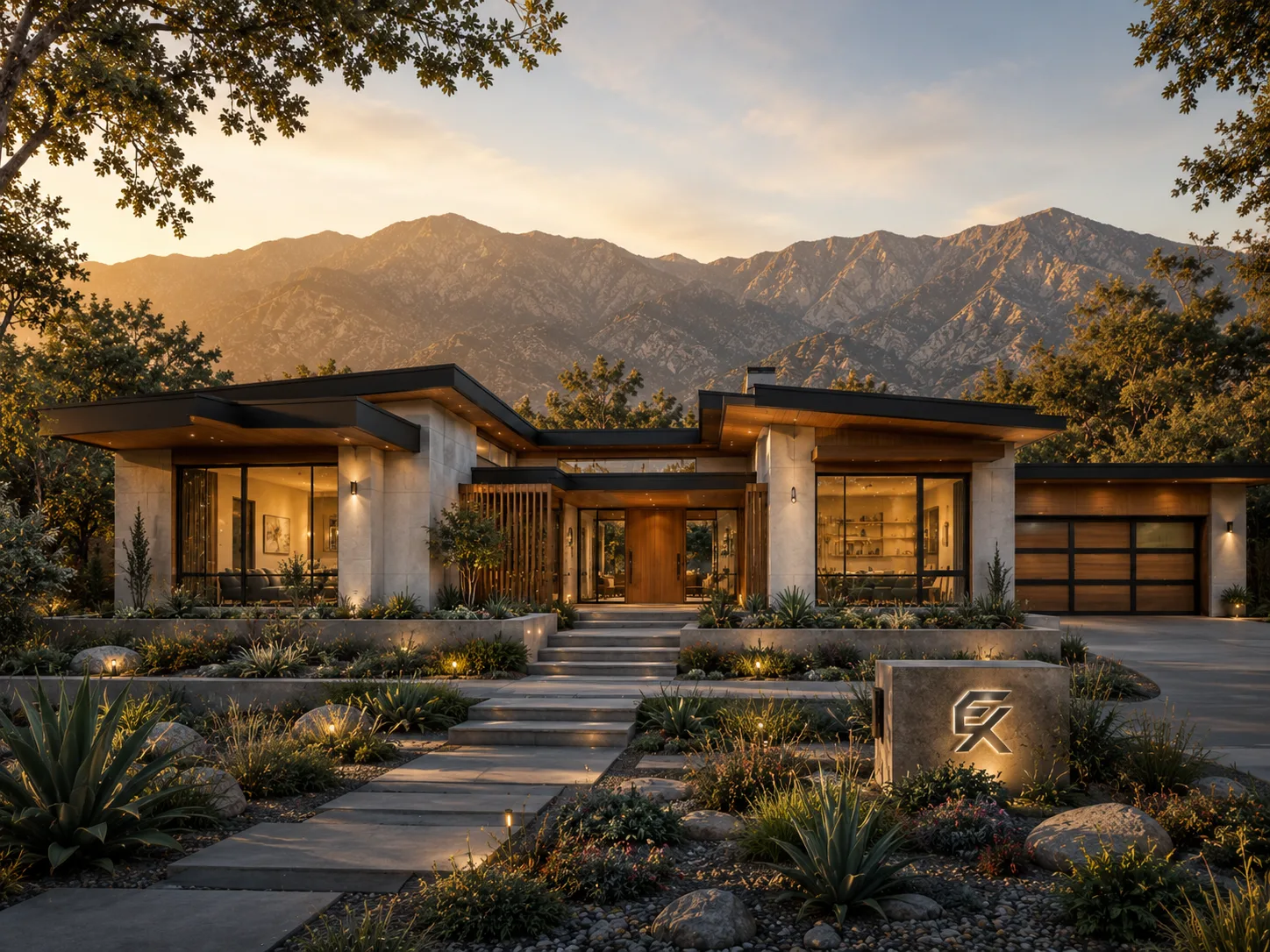
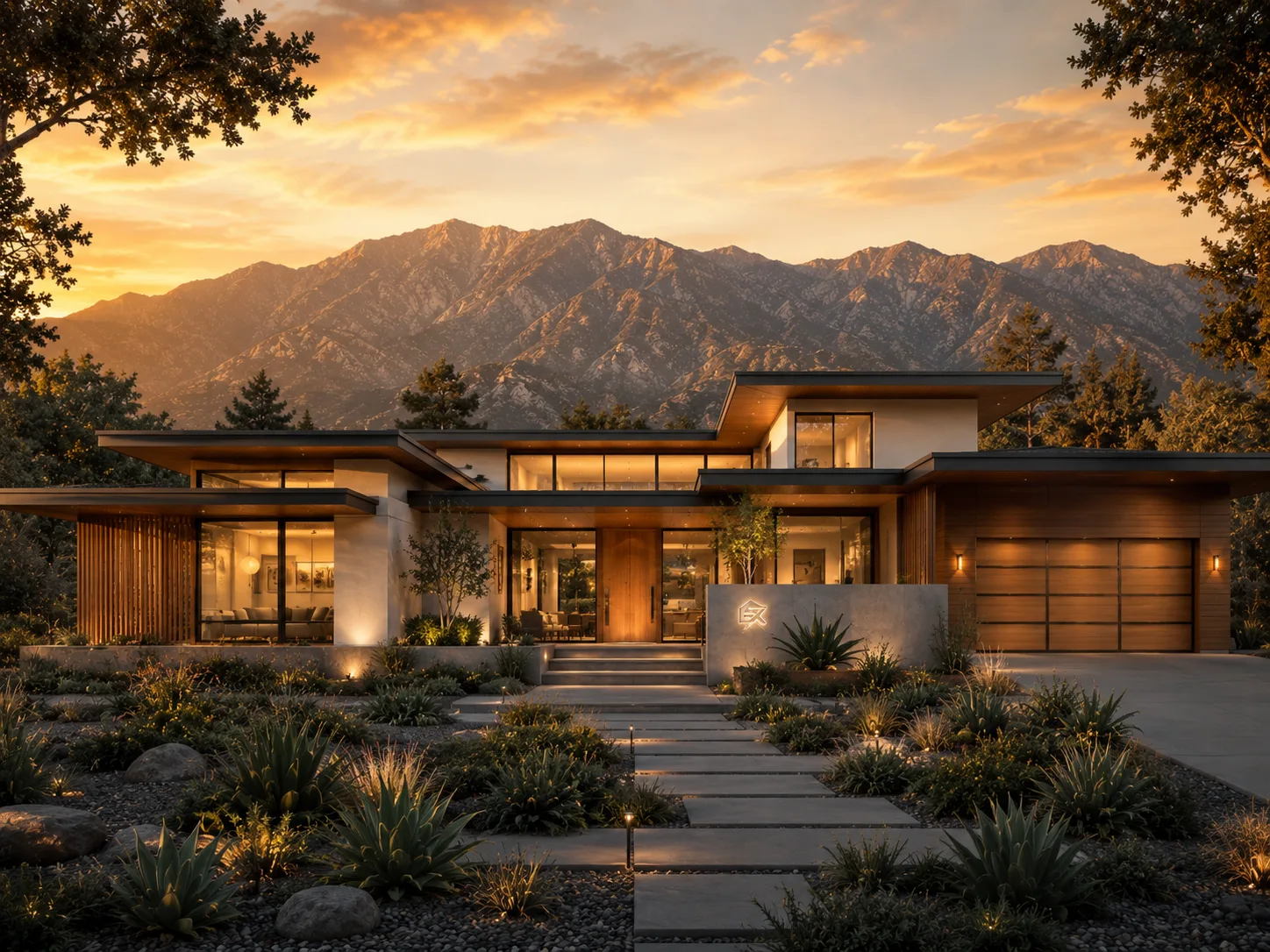
EGX modular single-family home render
EGX modular craftsman home render
EGX modular home at dusk render
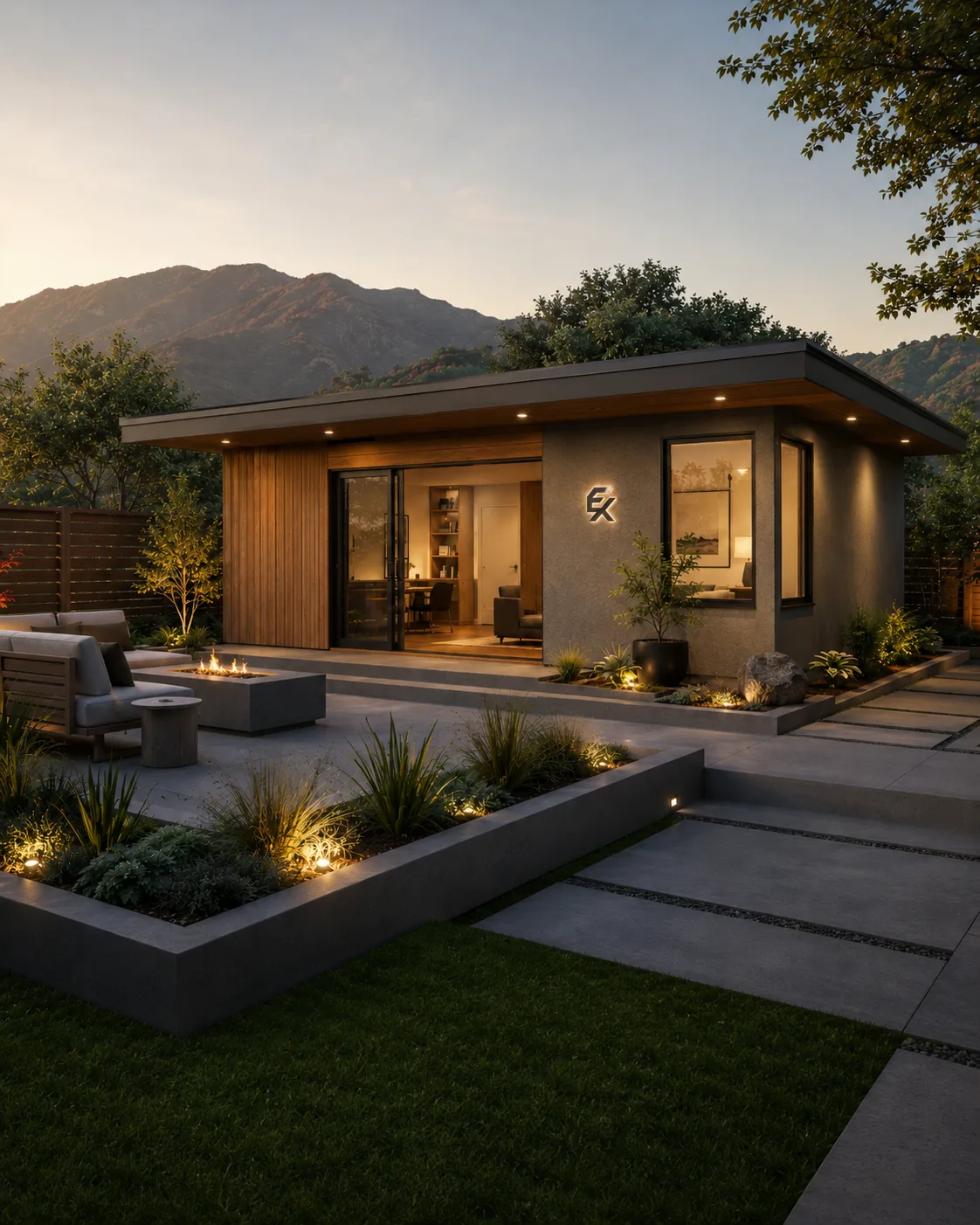
EGX modular backyard ADU at dusk
IRR Impact · Residential
25-35%++500-900 bps lift
Speed compresses carry, cost improves basis, and earlier delivery shifts cash flow forward. Single-home and subdivision projects underwrite to this range.
25-40%+
Faster Delivery
5-10%+
Hard Cost Compression
Lower
Carry & Insurance
Higher
Cash-On-Cash
ROM ranges are illustrative and conservative. Actual project economics depend on lot conditions, entitlement status, finish level, manufacturer selection, and current factory backlog. All projects are subject to feasibility study. Specific deal economics, vendor pricing, and underwriting frameworks are disclosed under NDA.
Why Modular Is Faster

Two Tracks
Running Concurrently

While the factory fabricates the modules, site crews prepare the foundation and auxiliary work. Both tracks finish around the same time. That parallelism is where the speed delta comes from. Conventional construction runs everything sequentially on one site.

Schedule Comparison · Residential Example
22 months baseline · 15 months modular · 7 months saved
0
2
4
6
8
10
12
14
16
18
20
Conventional
Stick-Built · Sequential
Design
Foundation
Framing
MEP / Drywall
Finishes
Punch
Stab.
EGX Modular
Factory + Site · Parallel
Design
Factory · 5 mo
Site · 4 mo
I
MEP/Fin.
P
S
8 mo saved

Illustrative for a single-family rebuild. Subdivisions and commercial projects compound the savings further as factory amortization and standardized assembly scale. Carry, insurance, and stabilization arrive proportionally sooner.

Commercial ROM Comparison

Returns Amplified
At Commercial Scale

Standardization compounds with unit count. Larger project finance amounts amplify carry savings. Stabilization arrives meaningfully sooner. Conservative ranges shown - actual project deltas often exceed these.

EGX Investments
Modular
150-Key Hospitality
Benefits Amplified
Speed Delta
Plans, permits, and construction through delivered units
Traditional
32-42 months
Modular
20-28 months
30-35% faster delivery
Cost Delta
Bonus
Hard-cost ROM versus conventional baseline
Traditional
100% (baseline)
Modular
90-95%
5-10%+ savings on hard cost. Soft costs and carry compress further from shorter timeline. All projections. Actual deltas often run higher.
EGX Investments
Modular
Workforce / Multifamily (40-80 units)
Benefits Amplified
Speed Delta
Plans, permits, and construction through delivered units
Traditional
22-30 months
Modular
14-20 months
30-35% faster delivery
Cost Delta
Bonus
Hard-cost ROM versus conventional baseline
Traditional
100% (baseline)
Modular
90-95%
5-10%+ savings on hard cost. Soft costs and carry compress further from shorter timeline. All projections. Actual deltas often run higher.
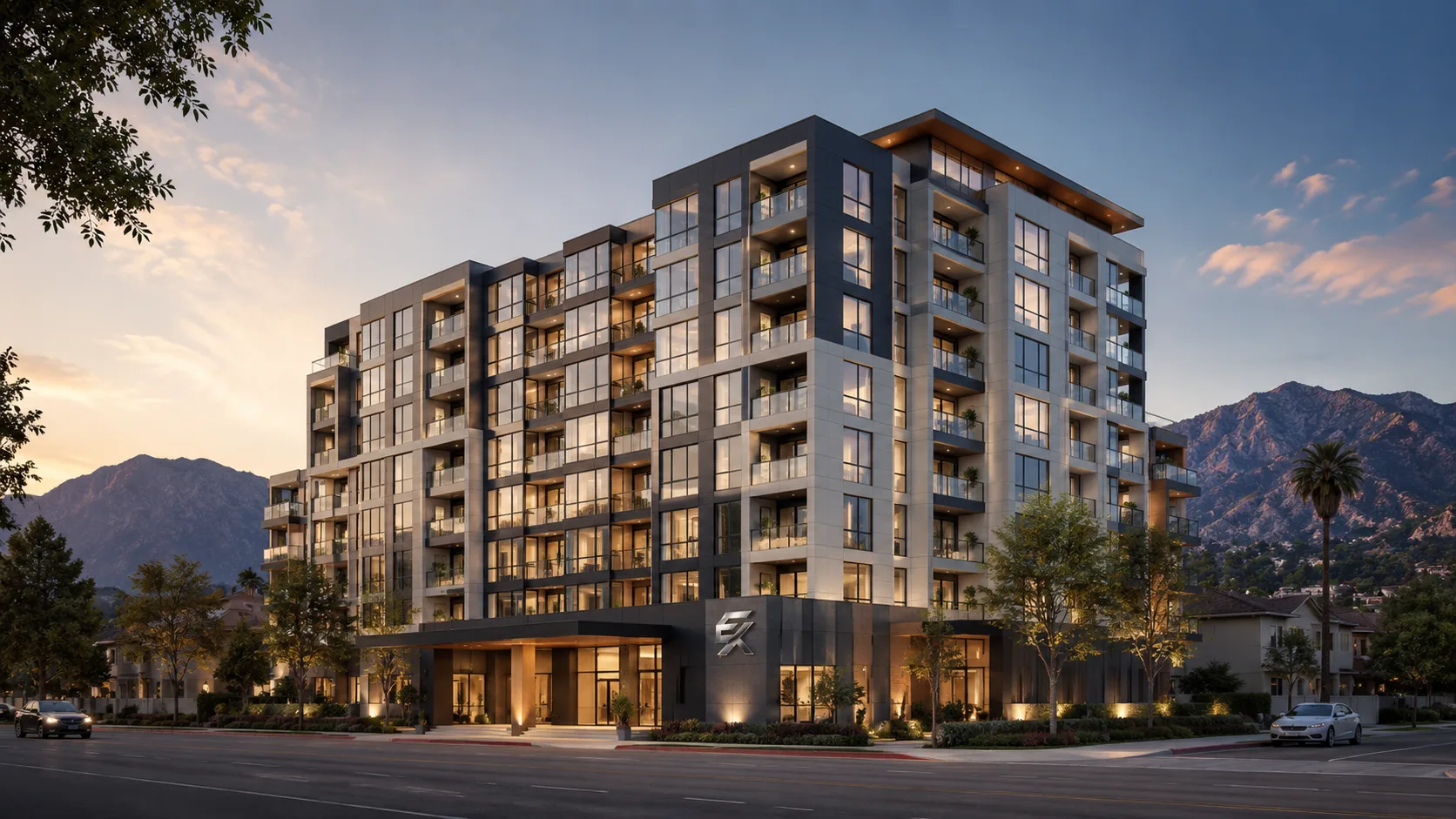
EGX modular multifamily apartment building
Commercial Render · 2
Commercial Render · 3
Commercial Render · 4
Why Commercial Amplifies The Win
Standardized keys and units carry across to factory amortization. Carry savings compound at larger project finance amounts. Insurance and GC liability shorten with the schedule. Stabilization arrives twelve to eighteen months sooner. The IRR consequence is structural.
IRR Impact · Commercial
27-38%++600-1,000 bps lift
Hospitality and multifamily amplify the modular delta. Factory amortization compounds with key count, and stabilization arrives twelve to eighteen months sooner than stick-built.
30-40%+
Faster To Stabilization
5-10%+
Hard Cost Compression
Lower
Insurance & Carry
Higher
Cash-On-Cash To LP

All ranges are conservative projections. Actual project returns depend on lot economics, entitlement status, capital structure, and exit conditions, and frequently exceed projections when factory amortization, FF&E pricing, and modular delivery discipline compound. All projects subject to feasibility study. Specific deal-level returns disclosed under NDA to qualified investors.

Financing

Modular Is Financed Differently
And That Is Where Schedules Are Lost

A conventional construction loan releases money against work standing on your site. Modular inverts that: a substantial payment goes to the factory before anything exists on the lot, and until the modules are set they are personal property rather than real property. A lender who has not underwritten this before will either decline or take long enough to cost you the schedule advantage you chose modular for.

It is a solved problem, not an obstacle. EGX sequences the lender conversation before a factory slot is reserved, because a financing structure discovered late is the most common way a modular project ends up slower than the conventional build it replaced.

Deposits Against Factory Milestones
Draws are structured to production stages rather than site progress, so the schedule the factory works to and the schedule the lender funds to are the same document.
Security Over Modules In Production
Filings and assignments give the lender a position in the units while they are still on the line and in transit, which is the window a conventional construction loan has no language for.
Builder's Risk That Travels
Cover extended to off-site storage and transport. A standard policy attaching at the property line leaves the most valuable uninstalled asset on the project uninsured while it is on a truck.
Lenders Who Have Done It Before
Specialist and regional lenders who already underwrite volumetric work. EGX makes the introduction; EGX does not lend, and takes no position in the financing.

EGX is not a lender and does not originate, broker, or arrange credit. Financing terms, security, and insurance requirements are set by the lender and its counsel, and vary by project, borrower, and jurisdiction.

Process

From Property Address
To Delivered Asset

EGX runs a five-stage path from preliminary screening through delivered building. Engagement fee applies at the engagement letter stage. Process is stop-or-go at every stage. Modular is recommended only when the math wins.
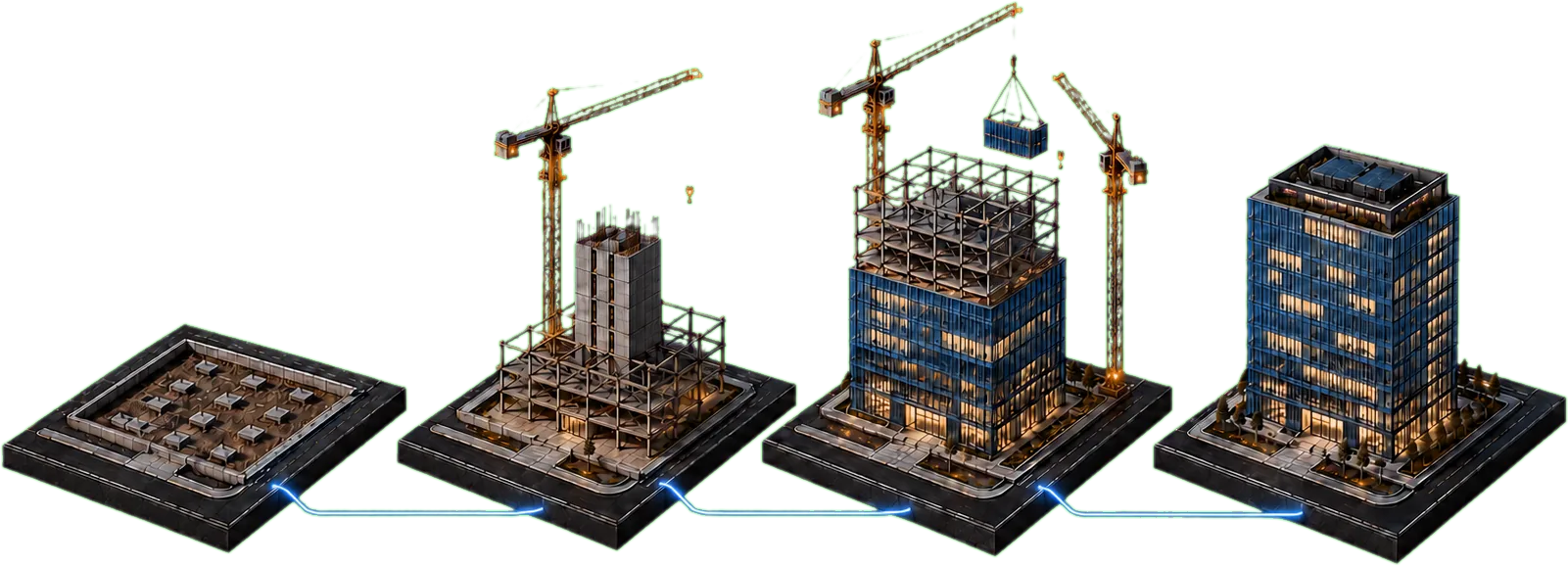
Architectural model of one site in four stages: entitled lot, structure under crane, topping out with a factory-built module being lifted into place, and the delivered building.
01
Preliminary Feasibility
Initial screening on lot, entitlement status, project type, and order-of-magnitude scope. No fee. Determines whether to proceed.
02
ROM Budget Estimate
Rough order-of-magnitude budget showing modular versus conventional delivery. Speed delta, cost delta, and IRR sensitivity. Output of preliminary feasibility.
03
Engagement Letter
Mutual engagement on scope, fees, and full feasibility deliverables. Engagement fee applies. Establishes the working relationship before commitment of full design and underwriting effort.
04
Full Feasibility Study
Detailed engineering, manufacturer specification, design coordination, vendor sourcing, entitlements path, and final delivered-cost framework. Output is a build-ready package.
05
A-to-Z Project Coordination
EGX coordinates entitlements, design, manufacturer selection, FF&E sourcing, site work, foundation, module install, finish, and stabilization. Single accountable framework end to end.
Engagement Fee Disclosure
Stages 01 and 02 are no-fee preliminary work. An engagement fee applies at Stage 03 (Engagement Letter) to cover the full feasibility study, design coordination, and underwriting effort that follows. Fee structure scales with project size and is credited against the development fee on projects EGX coordinates through Stage 05. Specific fee terms disclosed in the engagement letter.
Frequently Asked

Modular Questions
Answered Directly

How much does modular construction cost per square foot?
There is no honest single number, and any firm that gives you one before seeing the lot is guessing. Modular cost per square foot moves with site access, whether a crane can reach the set location, transport distance from the factory, foundation and site work, finish level, and how many identical units you are building. What EGX will commit to in advance is the comparison: against a conventional build of the same scope, modular delivery has run 5 to 10 percent or better on total cost and 30 to 35 percent faster. The per-square-foot figure for your project comes out of the preliminary read, which carries no fee.
Is modular actually cheaper than stick-built?
On total delivered cost, usually, but the savings are smaller than the marketing in this industry suggests and they are not where most people expect. The factory line saves less on materials than on labour, weather, rework, and theft. The larger economic gain is time: a build that runs 16 to 25 months conventionally runs 11 to 18 months modular, and on a financed project every month removed is carry cost removed. Where modular clearly wins is repetition. One custom house on a difficult lot may cost more modular than conventional; twenty similar units almost never do.
How long does a modular project take?
Roughly 30 to 35 percent less calendar time than the same project built conventionally, because factory production and site work run concurrently rather than in sequence. Foundations, utilities and site prep proceed while the modules are being built indoors, so two critical paths overlap instead of queueing. A single-family build lands around 11 to 18 months against 16 to 25 conventional, and an ADU is typically 8 to 12 weeks from factory release to a finished unit. The variable that moves this most is entitlement, which modular does not accelerate.
Will a lender finance a modular project?
Yes, but not every lender, and the ones who have not done it before will slow you down. The structural difference is that a large payment goes to the factory before anything exists on your site, so a conventional draw schedule tied to site progress does not fit, and until the modules are set they are personal property rather than real property. Lenders who work in modular handle this with deposits against factory milestones, security over the modules in production and transit, and builder's risk cover that extends to off-site storage and transport. EGX sequences the lender conversation before the factory slot is reserved, because a financing structure discovered late is the most common way a modular project loses its schedule advantage.
Does modular work for a fire rebuild in Altadena or Pacific Palisades?
It is the case where modular is strongest, for a reason specific to fire rebuild: the lot is already entitled and the prior structure establishes what can be rebuilt, so the slowest part of ground-up development is largely resolved before you start. That leaves schedule as the binding constraint, and schedule is what modular addresses. It also suits a rebuild market where thousands of lots are competing for the same trades at the same time, since factory labour is not drawn from the local pool. The qualifications are real: steep or narrow lots that a crane cannot reach, and highly custom architecture, both push a rebuild back toward conventional.
How do permits and entitlement work with a modular build?
Approval splits in two. In California the modules themselves are approved under the state Department of Housing and Community Development factory-built housing program, which certifies the factory and the unit design, with inspection happening on the production line. The local jurisdiction retains everything on your side of the property line: zoning and entitlement, foundation, utilities, site work, and the final certificate of occupancy. The practical consequence is that modular compresses construction and does nothing at all for entitlement. If a project is going to be delayed, it is usually delayed at the planning counter, not the factory.
What inspection and warranty applies to a modular building?
Inspection is arguably better than conventional rather than merely equivalent. Modules are inspected on the production line while wall cavities are still open, so framing, electrical, plumbing and insulation are examined before they are closed up, by a third-party or state agency rather than on a site visit that has to be scheduled around the trades. Site work, foundation, utility connections and the set itself are inspected by the local jurisdiction exactly as they would be on any build. Warranty comes from two places accordingly: the factory covers the module, and the general contractor covers site work and the connection between them. Getting that boundary written down before the order is placed is the part people skip.
When does modular not make sense?
More often than the industry admits, which is why EGX runs feasibility before recommending it. Modular loses its advantage on architecturally complex designs that resist repetition, on lots too steep, narrow or obstructed for crane access, on ultra-custom finish work that ends up being completed on site anyway, and on single one-off units where there is no repetition to amortize the factory setup against. Long transport distance from a suitable factory can erase the savings on its own. In those cases EGX builds conventionally or declines the project. A firm that recommends modular for every site is selling a method rather than solving a problem.
What is the difference between volumetric, panelized, and prefabricated construction?
They describe how much of the building is finished before it reaches the site. Volumetric modular ships three-dimensional room-sized boxes, largely complete inside, and captures the most schedule benefit. Panelized ships flat wall, floor and roof panels that are assembled on site, which travels more cheaply and suits lots a crane cannot serve, at the cost of more site labour. Prefabrication is the general category for any component built off site, from roof trusses upward. Pods are a narrower case, usually bathrooms or kitchens, built as finished units and dropped into an otherwise conventional building. EGX selects among them at feasibility rather than defaulting to one, because the right answer changes with the lot.

Timelines and cost ranges are industry context and EGX experience, not a quote. Every project is subject to formal feasibility study before any recommendation, and EGX builds conventionally or declines where modular does not pencil.

Fit Check

Does Modular Work Here
Answer In Under A Minute

Zoning tools tell you how many homes a parcel allows. None of them tell you whether those homes can be built in a factory and craned into place, which is a different question with a different answer. This one is ours.

Modular Fit Check
0 / 5 answered

Five questions that decide whether modular is viable on a specific site. This is a screen, not a feasibility study, and it will tell you when the answer is no.

Where is the site?
Distance to a suitable factory partner sets transport cost and lead time.
What is the site access like?
Modules arrive by truck and are set by crane. This is the constraint that ends most conversations.
How many homes or units?
Repetition is what the factory amortizes against. It is the largest single driver of the economics.
How custom is the design?
Factory tolerances reward repeatable plans. Bespoke geometry gets finished on site anyway.
How much does schedule matter?
Modular buys calendar time. Where time has no cost, the advantage is smaller.
Answer all five to see the read.
Send Me This Analysis
Complete the inputs above first.
Your inputs and the result above are sent with it, so the reply addresses your actual numbers. No account, and the result stays on screen either way.

A preliminary screen based on the inputs given, not a feasibility study and not a quote. Crane access in particular has to be confirmed on the ground. Every project EGX recommends goes through a formal feasibility study first, and where modular does not pencil EGX builds conventionally or declines.
Begin The Process

Submit Your Property
For Modular Feasibility

Submit a property address with project type and rough scope. EGX returns a preliminary feasibility read on whether modular pencils. No fee for the preliminary review. Engagement fee applies only if you proceed to a full feasibility study.

No fee for the preliminary read. Engagement fee applies only if you proceed to a full feasibility study. No commitment until engagement letter is signed. EGX recommends modular only when the math wins. Architectural complexity, irregular lot constraints, custom finish demands, and entitlement risk can render modular uneconomic. In those cases we build conventionally or decline. All projects are subject to formal feasibility study before any recommendation.

EGX InvestmentsNewsletter
Four issues a year, written by the EGX Investments team. Where we are putting capital, and what is moving it between the US and Asia.
Important Legal Disclosure: EGX Investments is a private real estate platform offering investment, development, brokerage, asset management, and syndication services. Direct investment opportunities are offered to qualified individual investors. Syndicated investment opportunities described on this website are private offerings made under Regulation D Rule 506(c) of the Securities Act of 1933, limited to verified accredited investors as defined in Rule 501. Limited partners in syndicated offerings receive quarterly reporting and annual K-1 distributions per the governing limited partnership agreement. Brokerage services, including 1031 exchange representation, are provided through licensed real estate professionals. Asset management services are provided to institutional and private clients on a discretionary or advisory basis as agreed. EB-5 capital is raised through partnership with a USCIS-designated Regional Center serving as marketing partner; EGX itself acts as project sponsor for the underlying U.S. real estate development. The partnered Regional Center is responsible for I-526E petition support, job-creation methodology, and USCIS compliance. EGX coordinates project-level diligence, source-of-funds documentation, capital structuring, and execution under qualified immigration and securities counsel. Specific Regional Center identification, engagement terms, and capital deployment protocol disclosed under NDA after qualification. Active engagement subject to final counsel sign-off. Nothing on this website constitutes an offer to sell or a solicitation of an offer to buy any security. Such offers are made only by means of definitive offering documents available exclusively after qualification and execution of confidentiality agreements where applicable. Past performance is not indicative of future results. All investments involve risk, including the possible loss of principal invested. Any forward-looking statements reflect EGX's current views and assumptions and are subject to risks and uncertainties that could cause actual results to differ materially. Prospective investors should consult with their own legal, tax, and financial advisors before making any investment decision.
Investment Opportunities Are Offered To Qualified Investors Only.